
Smartphone Gaming in East Asia
Mobile gaming is a major part of the video game industry across East Asia. In metropolises such as Tokyo, Seoul, Taipei, and Shanghai, smartphone gaming accounts for over sixty-five percent of all interactive entertainment revenue, substantially outpacing traditional home console and personal computer platforms combined.
This market dominance is the product of specific urban infrastructure conditions. Unprecedented smartphone penetration rates, ubiquitous high-speed 5G mobile telecommunications, and government subsidies for public digital infrastructure created an environment where high-fidelity interactive entertainment is accessible anywhere. The density of many East Asian cities also makes it easy to play during commutes and short breaks.
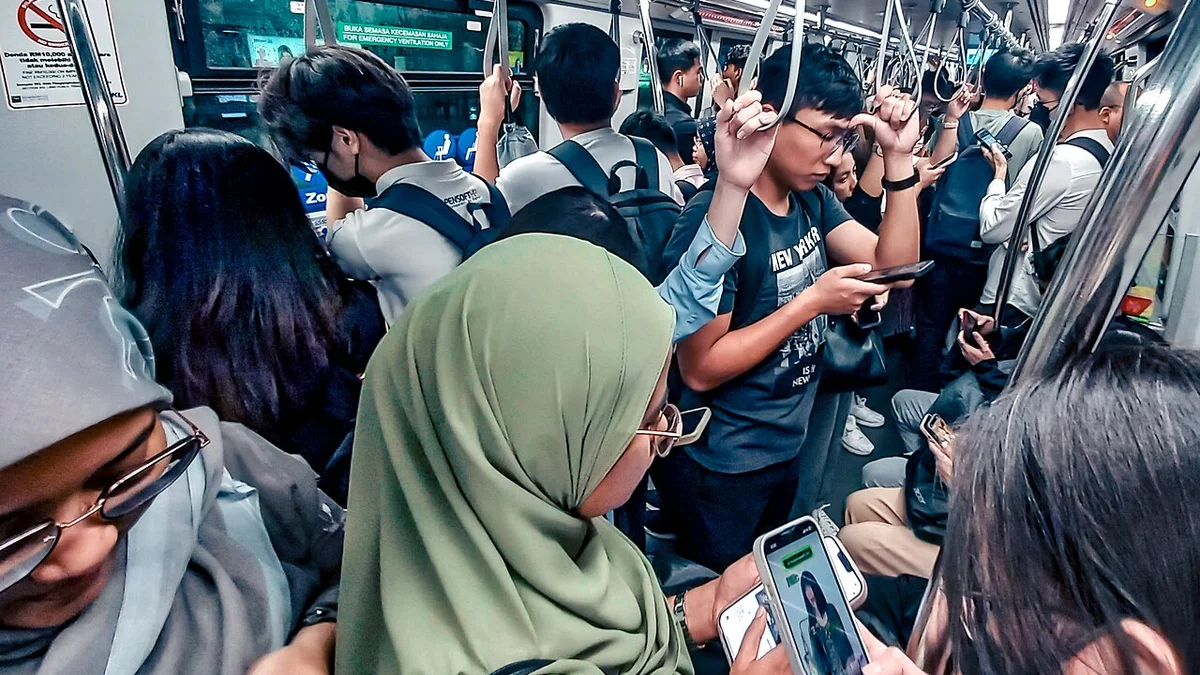 High-density Tokyo commuter transit corridor where portrait-mode micro-sessions dominate daily travel
Commutes and Mobile Micro-Sessions
The lifestyle catalyst for Asian mobile gaming is the daily metropolitan transit commute. Millions of white-collar professionals (salarymen) and university students spend between ninety and one hundred and twenty minutes daily navigating crowded subway networks, rail lines, and bus corridors. In compact train carriages where standing space is restricted, traditional two-handed gaming controllers or bulky tablets are physically impractical.
| Design Parameter | East Asian Mobile Gaming Standard | Western Mobile Gaming Standard | Primary Societal Driver |
|---|---|---|---|
| Screen Orientation | Portrait mode preferred for commute play | Landscape mode dominant | One-handed operation on crowded subway trains |
| Session Duration | 3 to 7 minutes (Micro-sessions) | 15 to 30 minutes (Extended play) | Synchronized with transit stop intervals |
| Automated Play Modes | Integrated auto-battle and sweep tickets | Manual interaction required | Multitasking during work and study hours |
| Social Integration | Embedded LINE, KakaoTalk, WeChat guilds | Third-party Discord / Game Center links | Direct peer pressure and community reciprocity |
This physical environment dictated the development of the micro-session design paradigm. Pioneered by early Japanese blockbusters like Monster Strike and Puzzle & Dragons, games were specifically engineered for single-handed portrait-mode operation. Game sessions are structured into discrete three-to-five-minute combat loops matching the transit time between metropolitan subway stops, allowing players to clear daily resource dungeons with minimal physical strain.
 Live-operations calendar tracking limited-time server events, seasonal banners, and community raids
The Social Currency of In-Game Progression
In the competitive social ecosystems of South Korea, Japan, and Taiwan, mobile gaming progression operates as a powerful form of cultural capital and social currency. In office environments, high school classrooms, and university cafeterias, mobile games provide an instant icebreaker across generational and professional hierarchies. Achieving high arena ranks, clearing difficult cooperative raid bosses, or pulling an elusive limited-edition banner character generates social prestige among peers.
Developers exploit this social dynamic by embedding their games directly into regional messaging giants: LINE in Japan and Taiwan, KakaoTalk in South Korea, and WeChat in China. Titles incorporate stamina-sharing systems, where sending virtual action points (heart tokens or stamina potions) to real-world contacts unlocks mutual rewards. This integration creates positive social pressure, drawing lapsed players back into active game loops and reinforcing community retention.
Live-Operations and the Crossover Event Economy
Asian mobile gaming operates on a continuous, high-intensity live-operations (Live-Ops) publishing model. Games are not static retail software products; they are dynamic digital services that cycle through weekly content patches, server-wide cooperative challenges, and bi-weekly gacha banner rotations synchronized with regional cultural calendars such as Lunar New Year, Golden Week, and Mid-Autumn Festival.
 Large-scale commercial billboard in Tokyo advertising a major anime IP crossover event in a mobile title
A vital driver of player retention is the intellectual property (IP) crossover collaboration, known as Collabo. Mobile titles routinely contract with prominent anime, manga, and classic video game franchises—such as Fate/stay night, Neon Genesis Evangelion, or NieR: Automata—to introduce limited-time characters and exclusive story chapters. These time-sensitive events trigger massive spikes in player engagement and in-game spending, proving the immense commercial power of cross-media synergy.
Mainstream Acceptance of Mobile Gaming
Historically stigmatized by older generations as an anti-social adolescent distraction, mobile gaming in East Asia has achieved full mainstream cultural legitimization. Corporate marketing campaigns feature national acting icons, professional athletes, and K-pop stars endorsing major mobile titles. High-budget orchestral concerts perform mobile game symphonies in classical concert halls, while convenience store chains host national promotional campaigns distributing in-game redemption codes with pre-packaged bento boxes.
By adapting to compact urban spaces, synchronizing with daily commuter rhythms, and weaving gameplay progression directly into personal social networks, East Asia constructed the world's most sophisticated mobile gaming culture, establishing design templates and monetization strategies that continue to reshape the global entertainment industry.
The technical backend architecture supporting East Asian mobile games is engineered for immense concurrent player spikes. During high-profile seasonal banner launches and New Year collaborative raids, server clusters must process hundreds of thousands of concurrent database read-write requests per second without latency degradation. Cloud infrastructure providers deploy geographically distributed edge servers across Tokyo, Seoul, and Taipei to guarantee instantaneous transaction validation and smooth live-ops event execution.
the cultural integration of mobile gaming is reinforced by telecommunications carrier billing partnerships. Major wireless providers across Japan and South Korea allow users to charge in-app gacha purchases directly to their monthly cellular phone bills with a single biometric fingerprint scan. This frictionless payment pathway eliminates credit card input barriers, seamlessly embedding mobile game microtransactions into everyday utility expenditures.
The societal status of mobile esports in East Asia has also fostered dedicated youth training camps and collegiate competitive leagues. Educational institutions recognize mobile gaming as an accessible platform for tactical team coordination, strategic communication, and rapid probabilistic reasoning under competitive pressure.