
Origins of the Corinthian Game in Pre-War Japan
Modern pachinko developed from American Corinthian bagatelle games brought to Kobe and Yokohama in the early 1920s. Imported under commercial manifests as table-top novelty amusements, these wooden sloped boards featured brass pins, inclined ball tracks, and scoring cups. Japanese toy manufacturers in Nagoya adapted the design for neighbourhood confectionery stores known as dagashiya. Children purchased stamped brass tokens or used small coins to flick steel ball bearings through mechanical brass pins to win fruit drops, dried squid, or bean paste sweets.
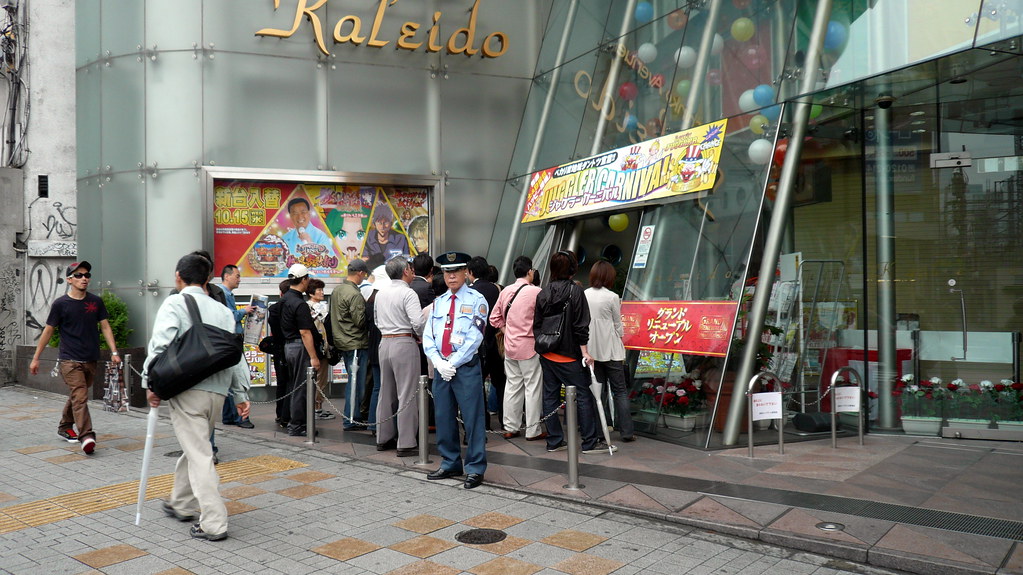
The machines were initially named Gachinko or Pachi-Pachi in popular parlance, mirroring the sharp onomatopoeic crack of metal balls impacting brass deflector pins. During the early Showa period, domestic craftsmen transitioned the playfield from horizontal counter layouts to vertical wooden cabinets mounted against candy store facades. This vertical shift transformed player posture and allowed urban shops with restricted floor footprints to operate multiple units along narrow shopping alleys.
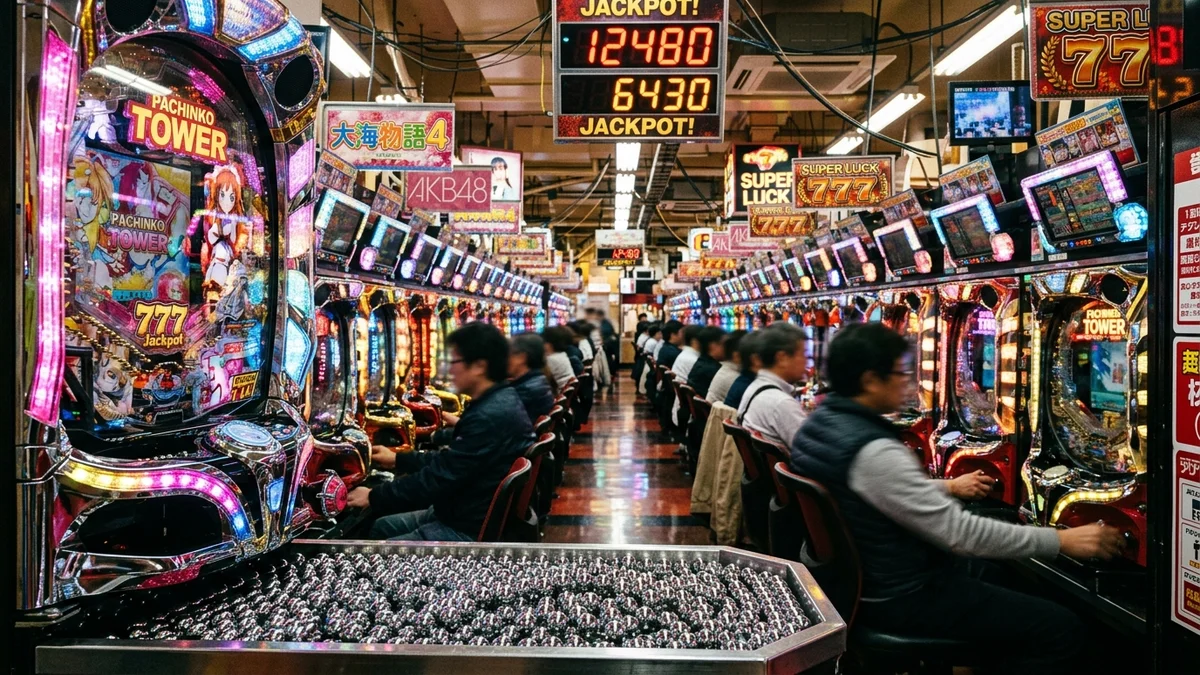 Pre-war vertical bagatelle cabinet showing the early hand-flick lever and mechanical ball return gates
Postwar Pachinko and the Three-Shop System
The Second World War brought severe commodity controls that shuttered civilian amusement manufacturing across major industrial cities. In late 1945, surplus ball bearings manufactured for military aircraft instrumentation flooded black markets across Osaka and Nagoya. Takeichi Masumura, a Nagoya glass merchant and carpenter, recognized the commercial opportunity in revitalizing damaged machines using surplus military bearings and scrap celluloid sheets.
In 1948, Masumura introduced the legendary Masumura Gauge. Prior machines relied on simple nail funnels that directed balls predictably along channel edges. Masumura redesigned the layout using an all-gauge arrangement of pins, installing diamond-pattern pin clusters known as hakama and tulip-shaped opening pockets called chulip. This arrangement allowed falling balls to bounce unpredictably through dynamic ricochets, creating tension between random gravity deflection and precise player launch trajectory.
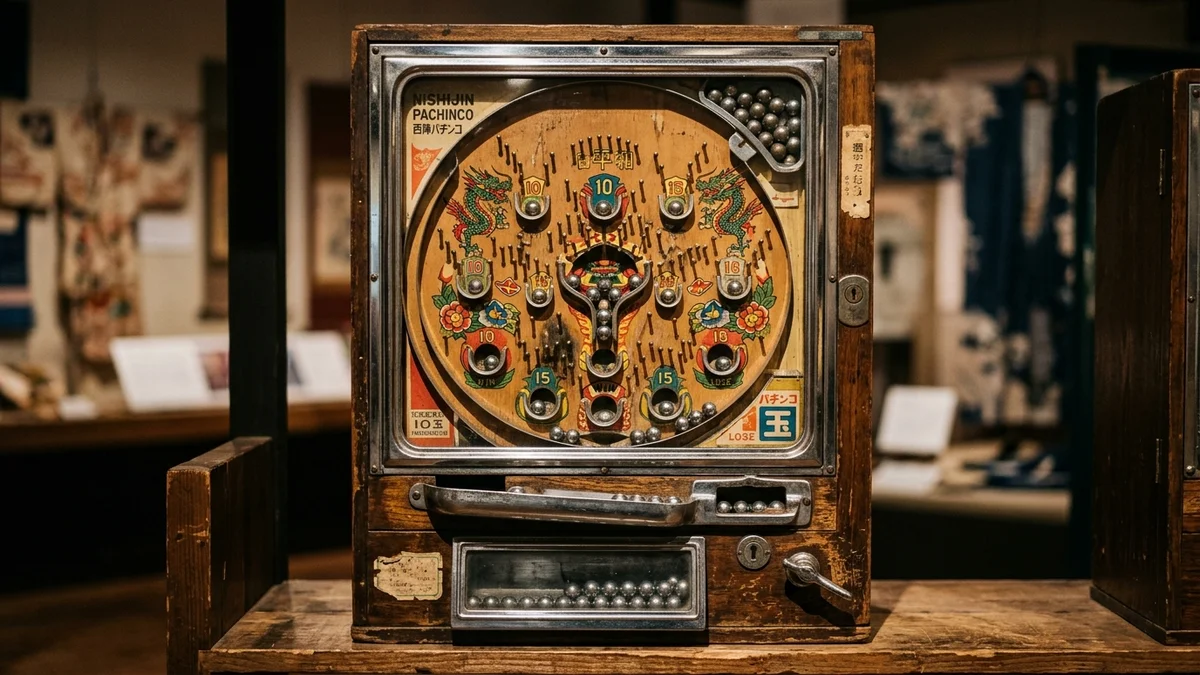 Schematic drawing of the 1948 Masumura Gauge all-pin deflection field
The popularity of Masumura's machines catalyzed the opening of dedicated pachinko parlors across war-damaged commercial hubs. Displaced residents and demobilized factory workers gathered in parlors to win scarce consumer staples, including canned meats, soap bars, and tobacco packets. During this era of post-colonial turbulence, Korean diaspora residents known as Zainichi Koreans entered the fledgling parlor trade. Excluded from mainstream civil service positions and large corporate keiretsu networks due to nationality restrictions, Zainichi entrepreneurs established independent parlor operations that evolved into major family-owned entertainment enterprises.
After 1954 police guidance, the Three-Shop System (San-ten Hoshiki) separated the parlor, prize exchange booth and wholesaler. It was later formalized under the 1984 Amusement Business Law. For its statutory basis and legal operation, see Gambling Laws in Japan.
Mechanical to Electro-Pneumatic Cabinets
Throughout the 1960s and 1970s, machines required players to manually load individual balls into a flicking lever. The introduction of rotary electronic handles in 1973 allowed players to launch up to 100 balls per minute using adjustable motor voltage control. This technological leap increased parlor game velocity and necessitated the development of automated ball recirculation systems beneath parlor flooring.
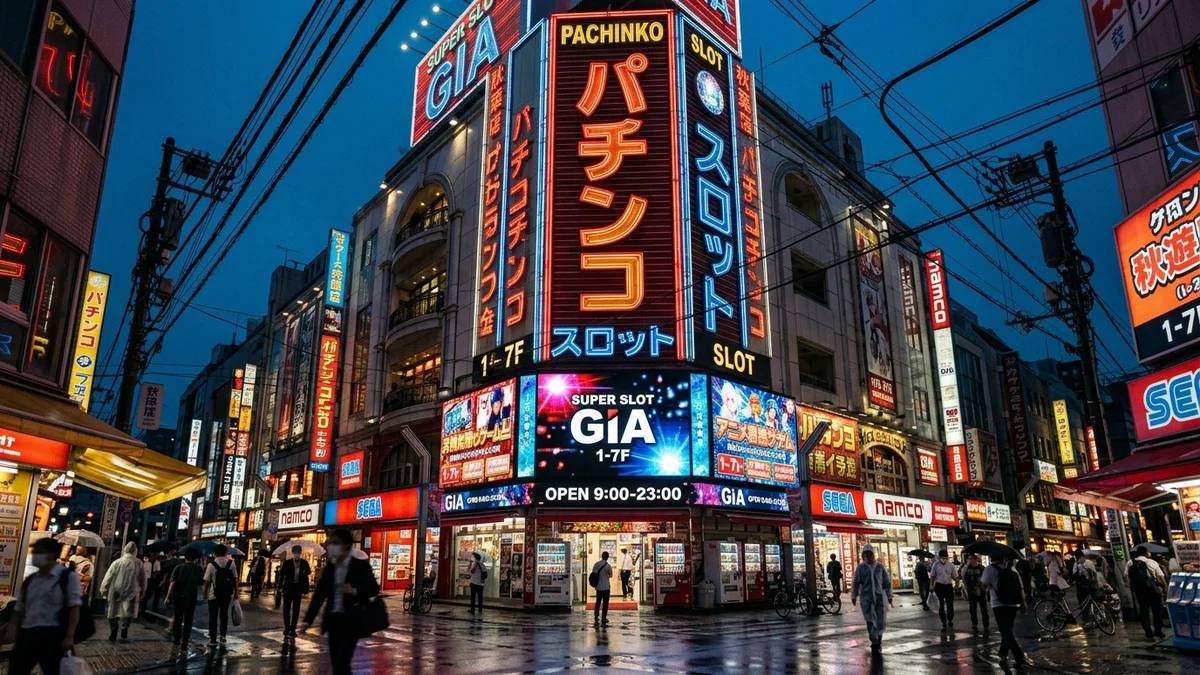 Electronic parlor aisle equipped with automated coin-card readers and overhead payout counters
The late 1980s witnessed the introduction of Card Reader pachinko, known as CR machines. To eliminate cash hoarding and enhance financial reporting transparency for taxation authorities, the National Police Agency mandated the adoption of prepaid magnetic IC cards. CR machines featured central liquid crystal sub-screens capable of running randomized digital lottery cycles whenever a physical ball entered the central start pocket. The integration of high-resolution digital screens introduced licensed media intellectual property, anime cutscenes, and complex audiovisual bonus cycles, altering the cultural character of the game.
Modern Pachinko Rules and Machine Caps
In February 2018, the National Public Safety Commission implemented major amendments to the Amusement Business Law enforcement regulations. Designed to curb excessive wagering intensity ahead of international tourism developments and integrated resort legislation, the 2018 revisions lowered the maximum ball payout ratio. The standard main jackpot probability was capped at 1 in 319, and the maximum gross ball payout for a single jackpot round was reduced from 2,400 balls to 1,500 balls.
These regulatory mandates accelerated parlor consolidation across Japan. Smaller independent operators operating under 200 machines faced steep capital costs to replace legacy hardware with compliant machines. Concurrently, machine manufacturers developed Smart Pachinko cabinets that completely eliminate physical loose balls from player contact, circulating sealed steel units internally and recording credits digitally on smart cards. This technological shift marks the latest evolution in an industry that has adapted its mechanical, financial, and regulatory architecture for over a century while remaining an enduring fixture of Japanese urban leisure.