
Japanese Amusement Centers
After the war, Japanese amusement centers developed differently from Western coin-operated arcades. Regulated under Category 5 of the Amusement Business Law (Fueiho), Japanese game centers, known colloquially as gesen, operate under strict statutory prohibitions against any direct or indirect cash redemption. This legal perimeter forced manufacturers such as Taito, Sega, Namco, and Konami to develop complex mechanical and electronic reward loops that deliver intense player engagement through pure game satisfaction, physical spectacles, and token accumulation.
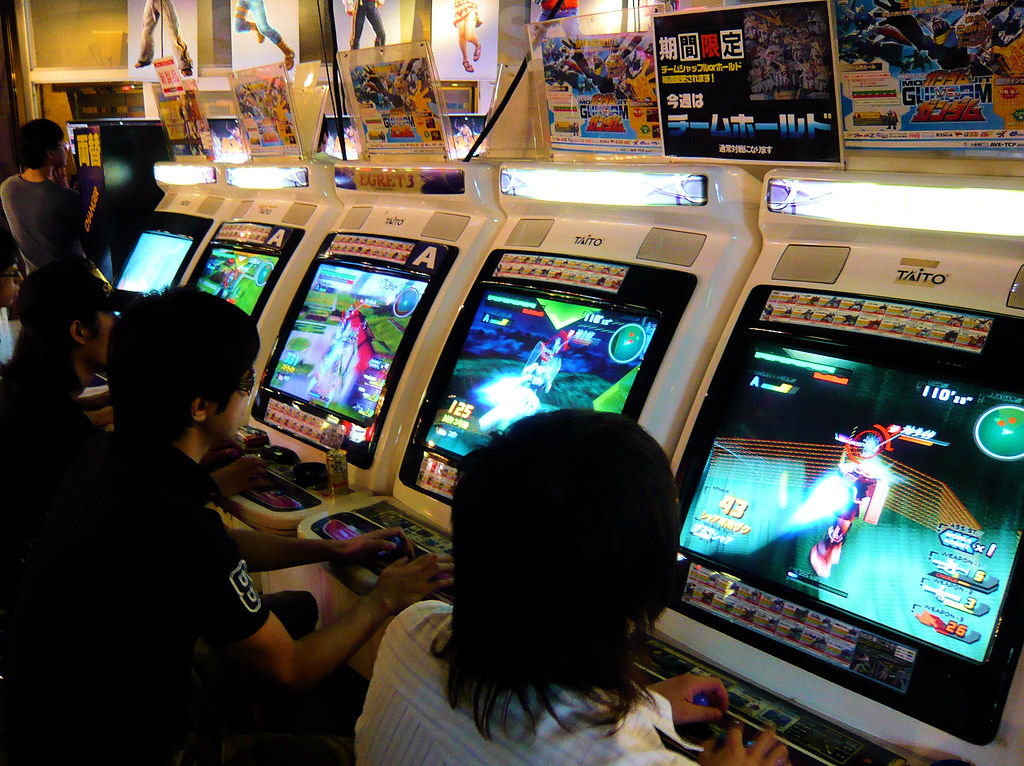
By the mid-1970s, urban arcades in Tokyo districts such as Shinjuku, Ikebukuro, and Akihabara bifurcated into two primary operational models: video cabinet arcades focused on skill-based competition, and dedicated medal game floors. Medal games utilize brass or alloy tokens purchased at exchange kiosks. Players use these tokens to operate specialized mechanical and video simulation terminals, accumulating tokens that must remain inside parlor account vaults or be stored in computerized player biometric accounts for future visits.
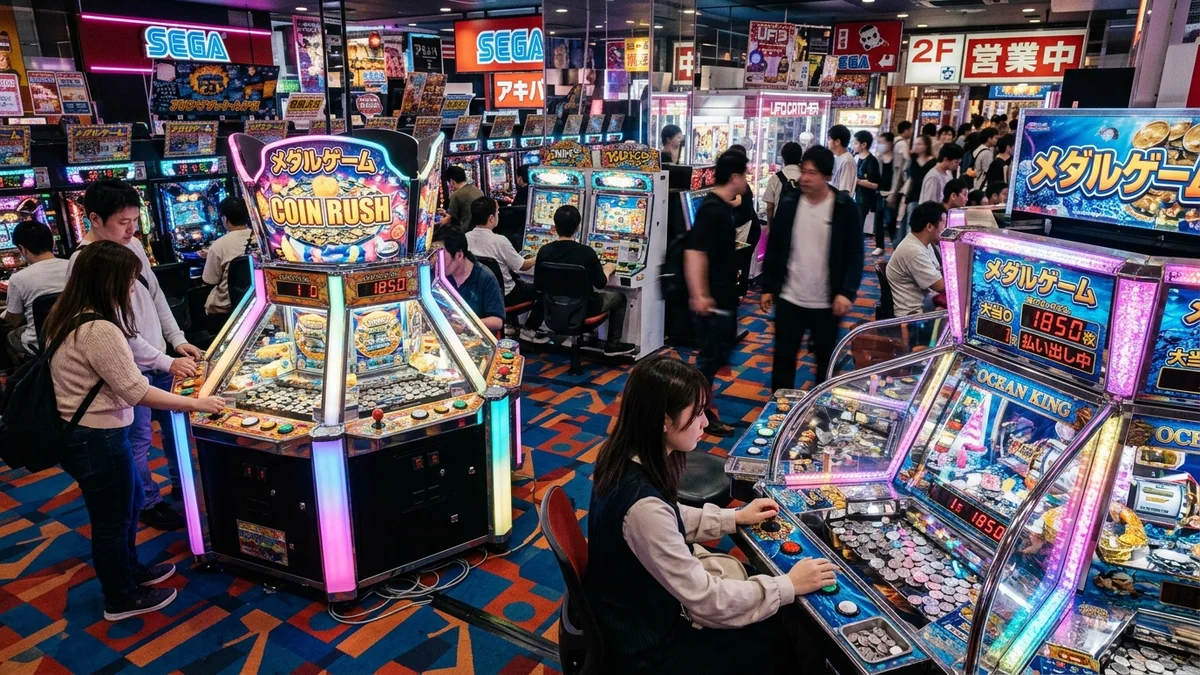 Industrial coin-pusher terminal showing multi-tiered mechanical slider beds and central bonus display
Physical Coin-Pusher Mechanics
The core mechanical marvel of the Japanese medal game floor is the advanced electro-mechanical coin pusher. Unlike early Western carnival pushers that relied on simple linear sweeping trays, Japanese manufacturers engineered multi-tiered gravity systems incorporating precision solenoid actuators, motorized edge dams, and micro-switch ball gutters. Machines like Sega's Royal Ascot (1989) and Konami's Grand Cross (2006) merged mechanical ball drops with physical sweeping trays.
A central mechanical principle of the coin pusher is the retention barrier and side gutter drainage. Medals dropped into the machine hit angled pin diverters before landing on moving polished steel plates. As the slider advances, it pushes stacked coins forward toward the lower shelf. However, engineering tolerances ensure that between 20% and 35% of all pushed tokens tumble into concealed side collection chutes rather than falling forward into the player collection bin. This mechanical house retention percentage sustains machine token economics while preserving the optical illusion of an imminent metal avalanche.
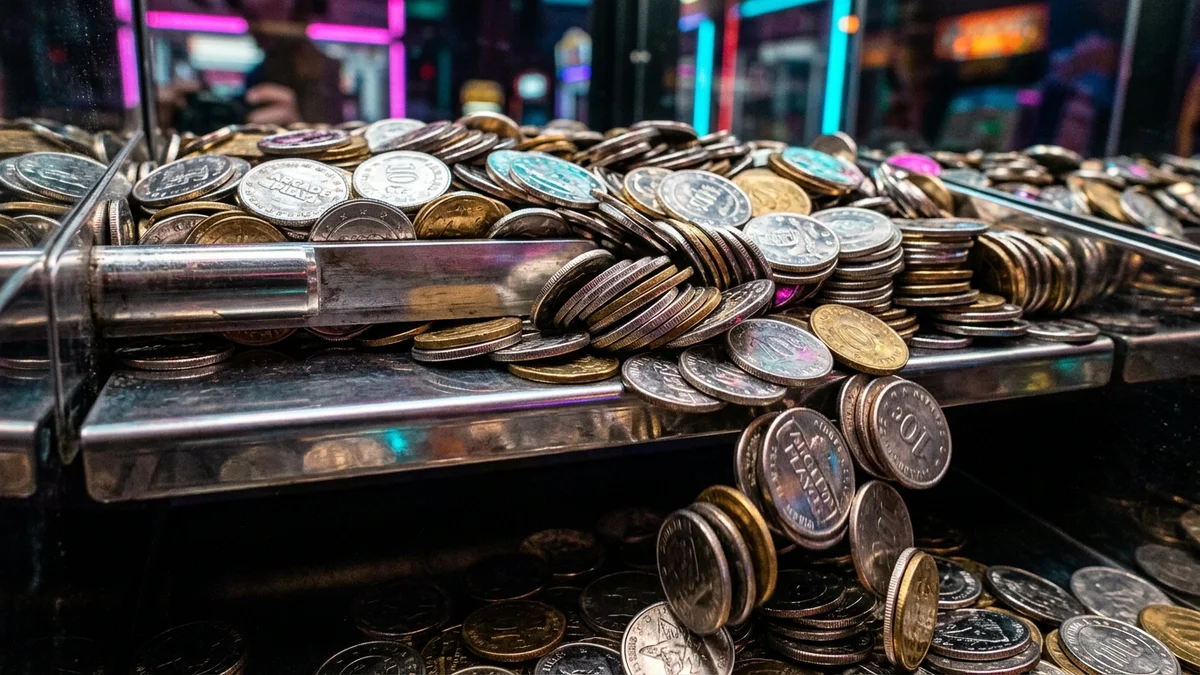 Cutaway schematic illustrating mechanical slider plate movement and side chute loss ratios
The mechanical slider mechanism cycles at precise frequencies, typically between 18 and 24 strokes per minute. This rhythmic oscillation creates an acoustic cadence that masks the mathematical probability curve operating behind the coin delivery chutes. Furthermore, progressive bonus drop chambers, known as saucer units, collect secondary chrome spheres that navigate physical pin fields to award multiplier bonuses, establishing multi-layered mechanical suspense.
Mechanical Roulette and Giant Wheels
During the early 2000s, Japanese arcade engineering reached monumental scale with the creation of circular multiplayer colosseum terminals. Konami's Grand Cross and Spin Fever series positioned up to sixteen independent player stations around a central mechanical theater towering over three meters high. These machines utilized real physical chrome spheres launched by compressed pneumatic air tubes into spinning physical roulette bowls mounted beneath the main display canopy.
| Amusement Component | Arcade Medal Mechanism | Direct Casino Adaptation | Primary Commercial Impact |
|---|---|---|---|
| Physical Wheel Spin | Pneumatic ball launcher into roulette rim | Community slot physical top-box wheels | Heightened social engagement among bank players |
| Progressive Jackpot | Token reservoir overflow tracking | Multi-tier linked progressive meters | Sustained bank play velocity and increased turnover |
| Anticipation Lighting | Full-cabinet LED strobing and bass vibration | Sensory immersion sound chairs and edge LEDs | Elevated emotional response during near-miss sequences |
| Card Account System | IC card contactless player tracking | Casino loyalty rewards and cashless smart cards | Frictionless session continuation and data capture |
When a player triggered a major jackpot condition on their individual video terminal, the machine transferred execution to the central physical roulette apparatus. Overhead spotlight arrays shifted, seat-mounted bass transducers vibrated, and mechanical actuators dropped the ball into the spinning track. This hybridization of digital virtual reels and tangible mechanical physics established an emotional intensity that video-only displays could not replicate.
Arcade Technology in Casino Slots
The technical innovations refined on Tokyo medal game floors directly influenced modern global casino manufacturing. In the early 2000s, Japanese entertainment conglomerates established specialized gaming divisions in Nevada and Macau. Konami established Konami Gaming in Las Vegas, while Sega Sammy formed Sega Sammy Creation. These corporations transferred mechanical engineers, graphic animators, and sound designers directly from their arcade divisions to casino slot machine development facilities.
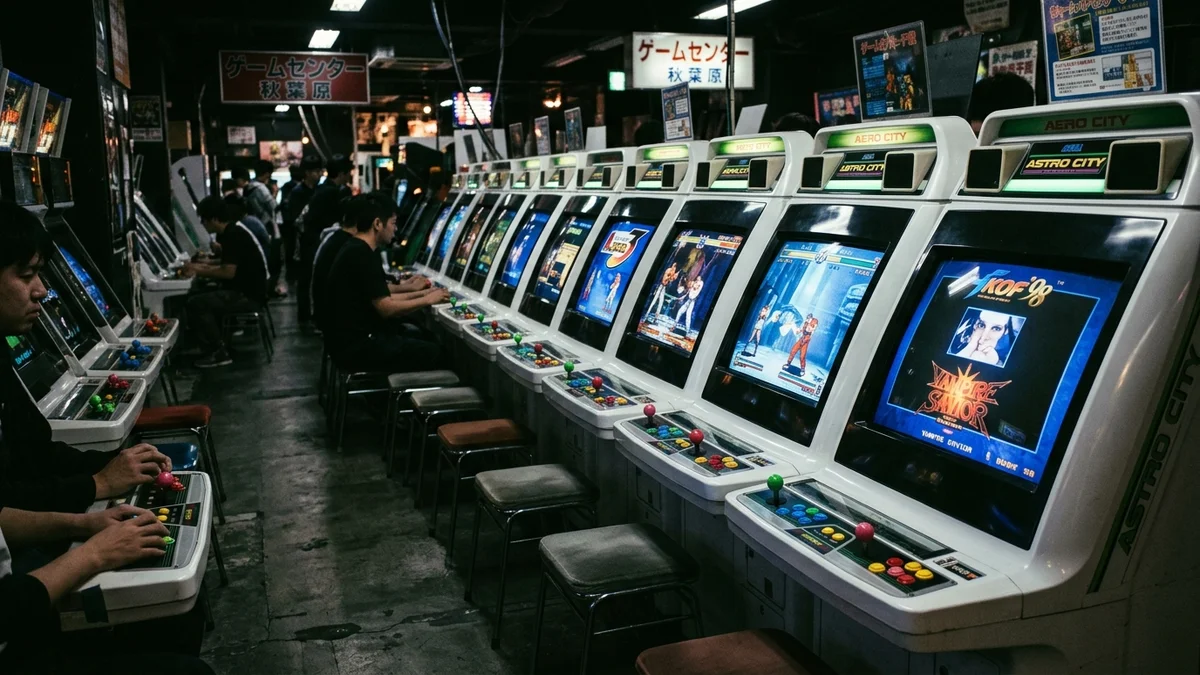 Casino slot cabinets incorporating arcade-derived physical top-box wheels and curved OLED displays
The impact of this migration transformed casino slot floor ergonomics. Some medal-game features, including shared bonus rounds, later appeared on commercial casino floors. The mechanical wheel units featured atop popular slot titles like Konami's Fortune Cup electromechanical horse racing game represent direct adaptations of arcade hardware blueprints developed decades earlier for Japanese game centers.
Audiovisual Pacing and Reward Cycles
Arcade game design in Japan mastered sensory reinforcement to sustain player focus without real currency cashout incentives. Sound designers utilized distinct pentatonic melodic cues, progressive octave rises during winning streaks, and synchronized cabinet ambient lighting to reward minor successes. In commercial slot design, these techniques evolved into the sophisticated anticipation pacing seen in modern video terminals.
Known in psychological literature as losses disguised as wins, the practice of celebrating minor payouts that are smaller than the initial wager originated in the flashing token streams of medal pushers. By surrounding the player with kinetic motion, physical metal clatter, and celebratory digital animations, Japanese arcade design established a sensory vocabulary that now defines high-volatility electronic gaming machines across global casino markets.
Some casino-floor features, including shared bonus rounds and mechanical displays, draw on Japanese medal games and arcade hardware.