
Core Tile Types and Game Structure
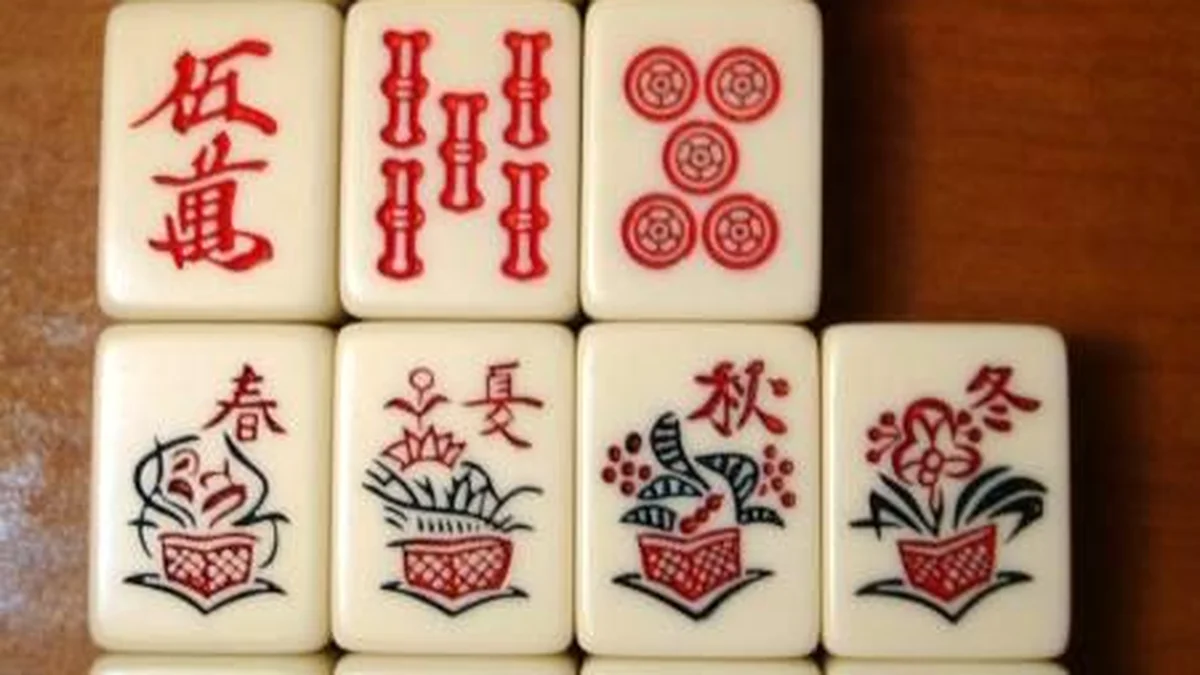
Mahjong rules and scoring differ across East and Southeast Asia, but regional versions share basic tile groups and a dealing structure. A standard classical set comprises 144 rectangular tiles crafted from bone, bamboo, or composite urea resin. This total inventory is divided into 136 basic suit and honor tiles, supplemented by eight optional bonus tiles representing the four seasons (Spring, Summer, Autumn, Winter) and four botanical flowers (Plum, Orchid, Chrysanthemum, Bamboo).
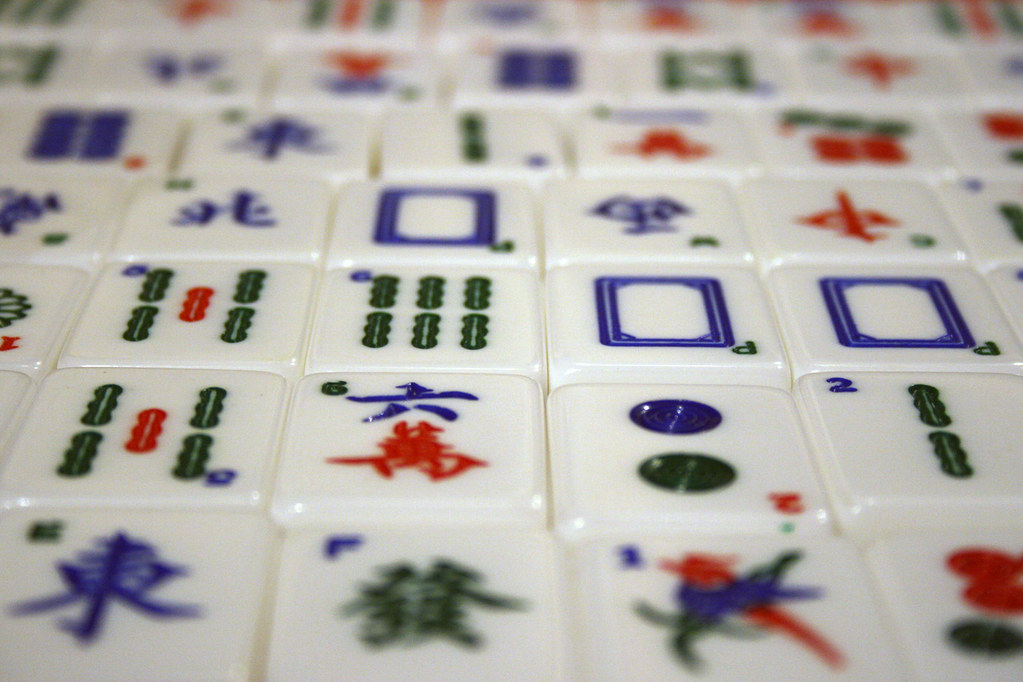
The suit tiles are divided into three numeric categories numbered 1 through 9: Characters (Wan), Bamboo (Sou), and Circles (Pin), with four identical copies of each tile yielding 108 suit pieces. The honor tiles consist of four Winds representing the cardinal directions (East, South, West, North) and three Dragons (White, Green, Red), totaling 28 pieces. Four players build a square four-tiered wall, each drawing thirteen tiles to form a starting hand, with the dealer drawing a fourteenth tile to initiate play.
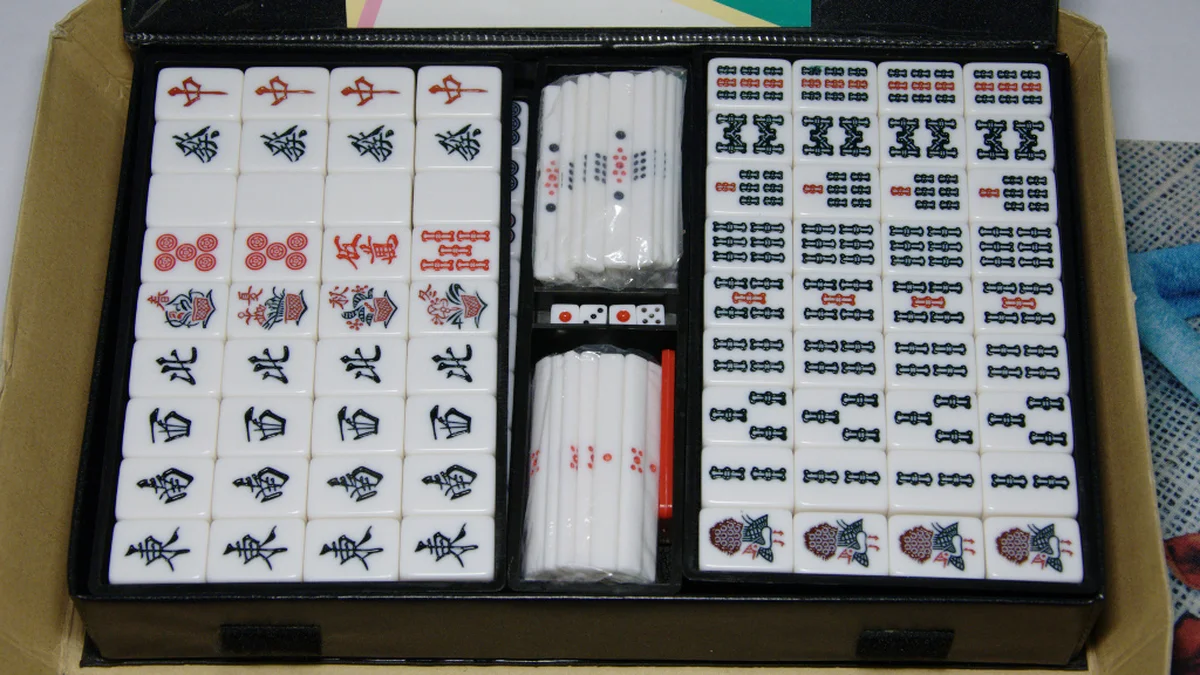 Standard 144-tile inventory displaying characters, bamboo, circles, winds, dragons, and seasonal flowers
Comparative Rulesets Across Asian Jurisdictions
As the game migrated across East Asia over the twentieth century, regional communities adapted hand requirements and scoring ladders to reflect local tactical preferences, ranging from defensive risk mitigation to explosive offensive point compounding.
| Regional Variation | Hand Structure | Scoring Unit | Minimum Hand Criteria | Defensive Protection Rules |
|---|---|---|---|---|
| Japanese Riichi | 4 Melds + 1 Pair (14 tiles) | Han and Fu (exponential) | Mandatory Yaku requirement | Strict Furiten rule on discards |
| Hong Kong Classical | 4 Melds + 1 Pair (14 tiles) | Faan (doubling ladder) | Customary 3-Faan minimum threshold | Partial discard penalty rules |
| Taiwanese Mahjong | 5 Melds + 1 Pair (16 tiles) | Tai (additive base score) | Variable table threshold | Strict eye-tile discard rules |
| Sichuan Bloody Battle | 4 Melds + 1 Pair (14 tiles) | Gen and Fan multipliers | Must void one entire suit | Continuous play until 3 winners exit |
Japanese Riichi Mahjong is internationally recognized for its mathematical and defensive complexity. Players cannot claim a winning hand based purely on assembling four melds and a pair; they must possess at least one certified pattern condition known as a Yaku (such as All Simples, Pure Double Chow, or Half Flush). Furthermore, the defensive Furiten rule dictates that if a player has ever discarded any tile that could complete their current winning wait, they are legally barred from claiming a win off another player's discard, forcing total defensive accountability.
 A 1,000-point bone counting stick (tenbo) deposited on the mat during a formal Riichi declaration
Hong Kong Old Style and Fast Pacing Mechanics
Hong Kong Old Style (HKOS), celebrated throughout the Pearl River Delta and the global Chinese diaspora, represents a more accessible, fast-paced ruleset. Hand scoring is measured in Faan, where points double exponentially with each fulfilled criterion up to a designated table ceiling, typically capped at eight or ten Faan. Common hands include Mixed Suit (Poon Yat Sik), All Triplets (Dui Dui Wu), and Thirteen Orphans (Sap Sam Yiu).
Unlike Japanese Riichi, Hong Kong rules permit players to win off opponent discards without strict Furiten penalties, and sequence melds (Chi) are freely formed from the player to one's left. Most commercial Hong Kong games enforce a three-Faan threshold (San Faan Hei Wu), preventing players from completing cheap chicken hands and forcing tactical hand development.
Taiwanese Sixteen-Tile Hands
Taiwanese Mahjong fundamentally expands the hand architecture by requiring players to hold sixteen tiles instead of thirteen, completing a winning hand with seventeen tiles arranged into five melds and a pair. This additional meld dramatically increases the frequency of multi-sided waits, where a single hand may await four, five, or six different potential winning tiles across interconnected sequences.
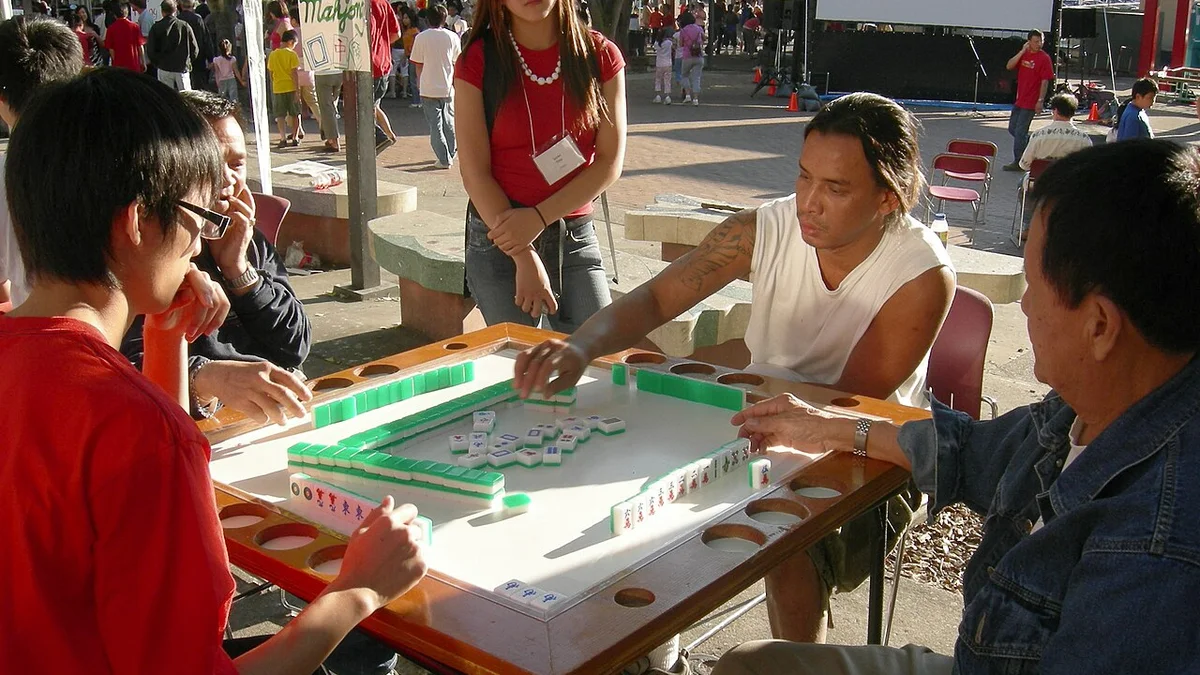
 Sichuan Bloody Battle table showing early discarded void suits and multi-round scoring tallies
Scoring in Taiwanese rules relies on additive Tai points rather than exponential doubling ladders. Points are awarded for concealed melds, flower tile correspondences with the player's prevailing seat wind, and automatic draw wins (Zi Mo). The expanded hand size makes defensive tile tracking considerably more demanding, as players must calculate potential meld interactions across a wider active board.
Sichuan Bloody Battle and Ruthless Elimination
In Southwestern China, particularly Chengdu and Chongqing, Sichuan Bloody Battle (Xuezhan Daodi) represents an aggressive evolution of regional table play. At the start of the hand, all four players must declare and discard an entire suit, playing exclusively with the remaining two suits (Ding Que). Forming a hand with tiles from the forbidden void suit results in catastrophic penalty payments.
The definitive mechanic of Sichuan Mahjong is continuous elimination. When a player completes a winning hand, they do not end the round. The winner collects their payout from the discarding player, reveals their winning hand, and steps aside while the remaining three players continue drawing and discarding. This cycle repeats until three players have won or the wall is completely exhausted. This relentless attrition eliminates defensive stalling, forcing players to pursue rapid, aggressive hand completion.
The rich diversity of regional mahjong rules illustrates the flexibility of the medium. Whether through the surgical defensive precision of Japanese Riichi, the fast-flowing doubling ladders of Hong Kong, the expanded arrays of Taiwan, or the elimination battles of Sichuan, mahjong provides a dynamic strategic framework that mirrors the tactical values of each Asian gaming community.
The defensive discipline of Japanese Riichi Mahjong is further illustrated by the Suji (line) and Kabe (wall) tile-reading theories. Because the Furiten rule prevents opponents from winning on previously discarded tiles, experienced players analyze the discards of a player who has declared Riichi. For example, if an opponent has discarded a 4-Character tile, the 1-Character and 7-Character tiles are considered relatively safe against dual-sided sequence waits (Suji safety), because a winning wait of 1-4 or 4-7 would be invalid under Furiten regulations.
In Taiwanese 16-tile mahjong, scoring calculations incorporate compound Tai bonuses for specialized tile formations. Winning hands that feature eight flower tiles trigger automatic immediate maximum payouts (Da Ba Xian), while hands assembled entirely without drawing from discarded tiles (Tian Hu for East dealer, Di Hu for non-dealers) award astronomical base multipliers. Players must weigh the chance of a high-value hand against the safer option of completing a simpler one.