
Ball Ballistics vs. Electronic Randomness
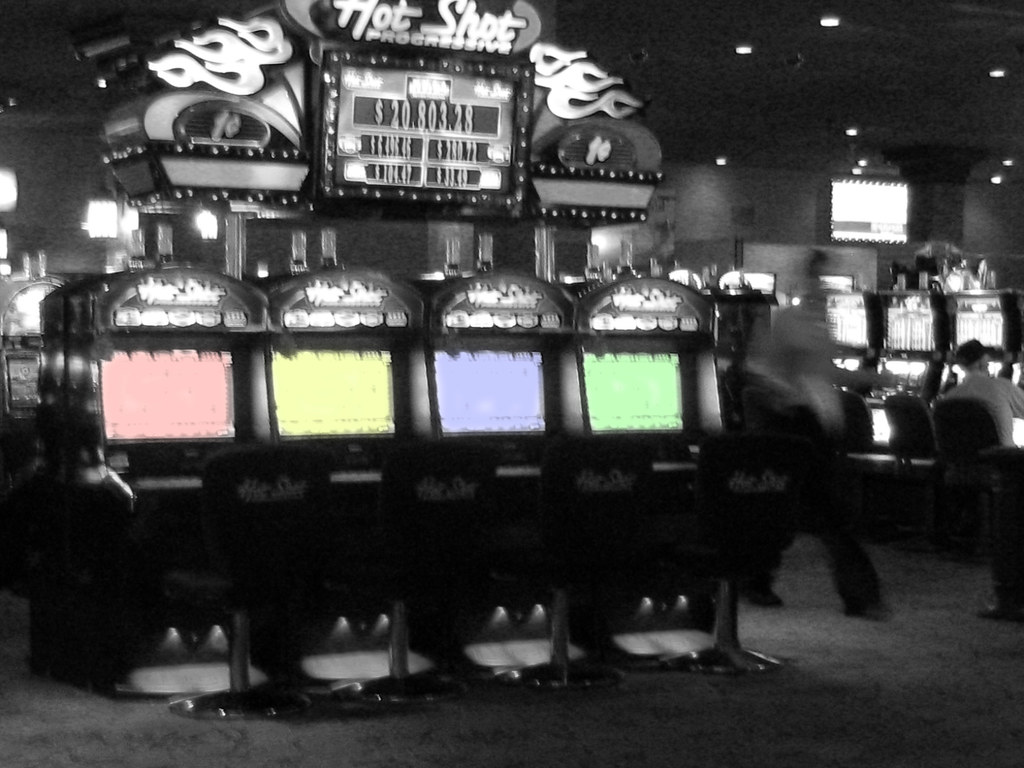
Pachinko and video slots generate outcomes differently: pachinko uses physical balls, while slots rely on pseudo-random number generation (PRNG). In a traditional Western slot terminal, the player initiates play by pressing a spin button or touching a glass panel. At the exact microsecond of button depression, the machine's central processing unit samples an electronic PRNG seed that determines the final reel stop positions according to a fixed probability lookup table.
In contrast, Pachinko is an electro-pneumatic physics game governed by gravity and material deflection. Players purchase hundreds of eleven-millimeter polished steel ball bearings, each weighing exactly 5.5 grams. A motorized rotary firing handle launches balls upward at a regulated speed of up to one hundred balls per minute through a curved brass launching channel. Once the ball crests the top of the vertical cabinet, it tumbles downward through a labyrinth of approximately five hundred brass pins, known as kugi, and dynamic mechanical diverters.
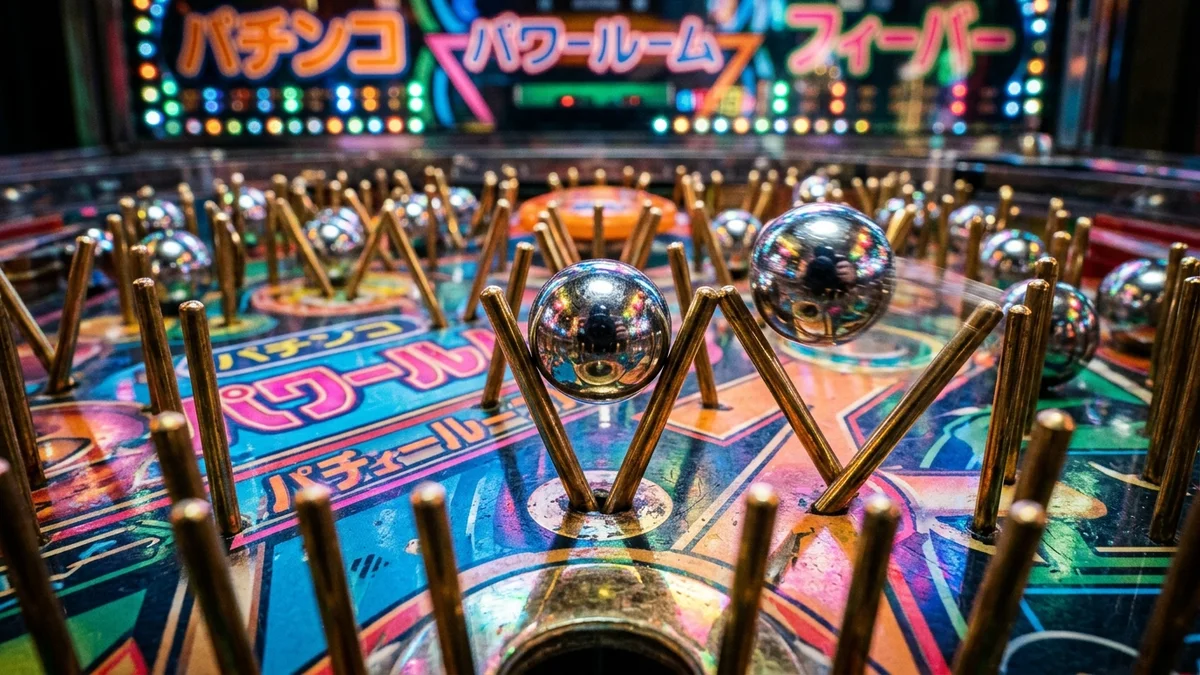 High-speed capture of 11mm steel balls ricocheting through precision-angled brass deflector pins
The Dual-Stage Probability Gate System
Unlike slot machines where a single user action immediately resolves the wager outcome, modern digital pachinko operates through a dual-stage probability architecture. The first stage is physical and mechanical: the player must manipulate the rotary firing handle to direct falling balls toward the central start pocket, known as the chuka-kuchi or heso (navel). Balls that miss this narrow opening fall to the bottom drain chute and are permanently lost.
| Mechanical Parameter | Japanese Pachinko Terminal | Western Video Slot Machine | Core Operational Difference |
|---|---|---|---|
| Primary Wager Element | 11mm steel balls (4 yen standard) | Electronic currency credits ($0.01 - $100) | Physical ammunition vs digital accounting |
| Outcome Initiation | Physical entry into start pocket | Instantaneous spin button press | Mechanical obstacle vs immediate RNG sample |
| Player Agency | Continuous manual handle torque adjustment | Binary button depression (spin or stop) | Kinetic angle control vs passive observation |
| Jackpot Cycle Speed | 10 to 15 minutes of continuous ball payout | Instantaneous credits added to digital meter | Prolonged physical collection vs instant tally |
Only when a physical ball successfully enters the central start pocket does the machine trigger the second, electronic stage. The internal micro-controller samples a random number from a cycle of approximately 65,536 integers to determine whether the jackpot condition is met. Under National Public Safety Commission regulations established in 2018, standard main jackpot hit ratios are capped at 1 in 319.2. If the electronic lottery hits, the machine initiates an audiovisual celebration sequence on the central LCD display, opening lower high-capacity payout gates (attacker gates) that yield fifteen prize balls per successful entry.
 Engineering comparison: Linear slot PRNG cycle versus two-stage pachinko trajectory gate
Player Agency, Pin Bending and Nail Tuning
The existence of physical pins introduces the concept of machine tuning, known in Japan as kugi-chosei. Skilled parlor mechanics, known as kugi-shi, historically utilized specialized brass brass-gauge mallets and optical feeler gauges to adjust pin angles by fractions of a millimeter before morning parlor openings. Widening the gap above the central start pocket by just 0.25 millimeters could increase start pocket entry frequency from five balls per thousand to twelve balls per thousand, substantially altering daily parlor revenue.
While modern police directives strictly prohibit intentional pin tampering by parlor staff, microscopic irregularities in pin alignment, wear on launch springs, and ambient parlor humidity create real variances between adjacent machines. Experienced pachinko players spend hours inspecting pin alignments with handheld optical loupes, searching for sweet spots where overlapping pin tips form natural funnels toward the start gate. This element of physical observation and manual firing pressure gives players a tangible sense of operational mastery absent from deterministic slot spinning.
Payout Mechanics and Physical Volume Dynamics
A striking difference between pachinko and international slot terminals is the physical reality of payouts. When a slot machine hits a major jackpot, digital numbers increment silently on a video credit display. In contrast, a pachinko jackpot triggers a thunderous physical waterfall of thousands of steel balls tumbling into plastic collection trays. Parlor aisles echo with the acoustic roar of metal rolling through stainless steel hoppers.
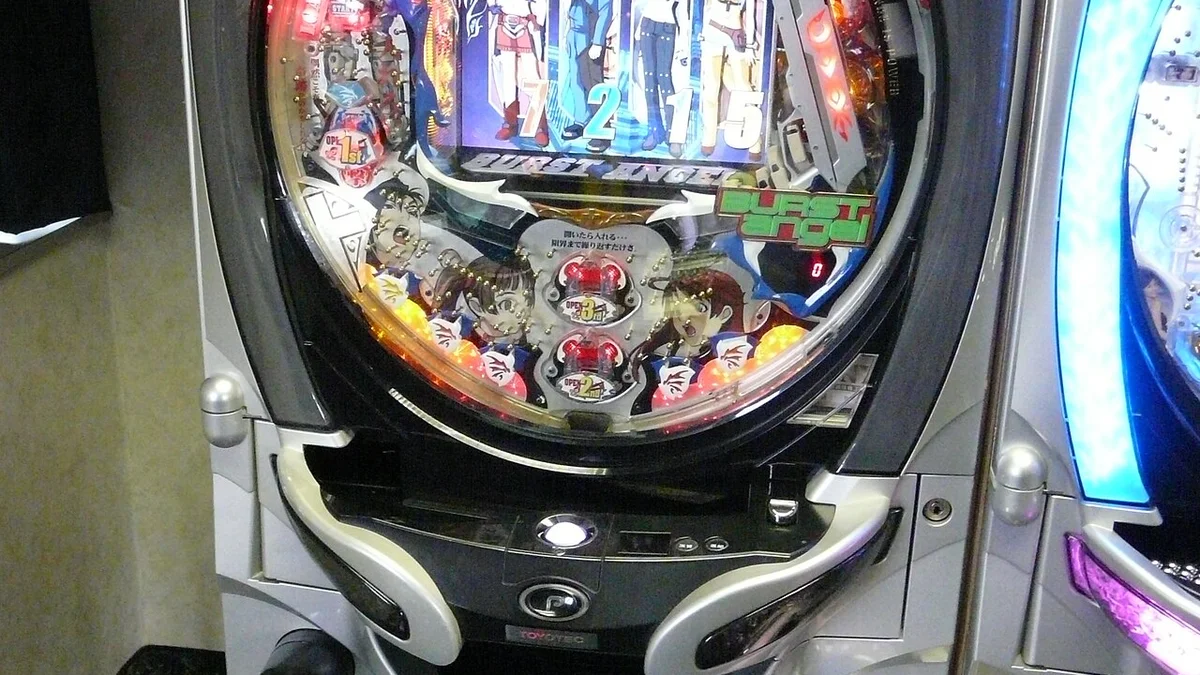 Modern cabinet tray equipped with optical jet-counter sensors measuring physical prize ball volume
A standard 1,500-ball jackpot round requires players to continuously launch balls into the wide-open attacker gate over several minutes. Players stack filled plastic boxes behind their chairs as visible trophies of success. In modern parlors utilizing automated jet counters, balls are emptied into digital sorting scales that calculate prize totals automatically, but the tactile weight of thousands of heavy steel spheres remains central to the experiential appeal of the medium.
Smart Terminal Convergence
In recent years, the engineering boundaries between pachinko and electronic slot machines have begun to blur with the advent of Smart Pachinko (Sma-Pachi) cabinets introduced in late 2022. Smart Pachinko eliminates external loose balls entirely; the steel balls circulate exclusively within an internally sealed mechanical chassis, with all player credits recorded and displayed on digital LED counters.
Despite eliminating physical ball handling, Smart Pachinko retains the essential physical pin matrix, the manual voltage launch handle, and the dual-stage probability gate. By preserving the physical interaction between launched ball bearings and deflector pins while digitizing credit accounting, Japanese manufacturers have maintained the distinct mechanical soul of pachinko while modernizing parlor sanitation, reducing labor overhead, and complying with rigorous national anti-tampering standards.
The contrast between Western slot terminals and Japanese pachinko reflects divergent cultural attitudes toward automated leisure. Where Western gaming prioritizes rapid, frictionless outcome resolution, Japanese pachinko celebrates kinetic rhythm, mechanical tactility, and the continuous interplay between player launch pressure and physical pin geometry.
From an algorithmic perspective, the contrast between Western slot random number generators and pachinko mechanics highlights fundamentally different approaches to probability architecture. Modern international video slots utilize cryptographically strong pseudo-random number generator algorithms, such as the Mersenne Twister or hardware random number generators (HRNG), which continuously cycle through billions of numerical seeds per second. When the player presses the spin button, a single numerical value is captured, instantaneously mapping to virtual reel stop positions across thousands of virtual stops.
In contrast, pachinko separates the mathematical random lottery from the physical delivery system. The player's continuous manual control over the firing handle's potentiometer voltage directly alters the kinetic velocity of launched balls. Subtle shifts in rotational wrist pressure change the angle at which steel spheres impact the upper deflector pins, altering the density of balls entering the central scoring zone. This mechanical agency creates a feedback loop where physical dexterity and patience interact directly with statistical probability.