
Technology in Player Protection
Responsible-gaming programs in Singapore, Macau and South Korea have added real-time safeguards to older measures such as brochures, warning signs and helplines.

This technological shift is driven by rigorous statutory mandates that compel operators to identify, intervene with, and mitigate problem gambling behaviors before severe financial harm occurs. Leveraging facial recognition artificial intelligence, smart card cashless telemetry, and predictive algorithmic player tracking, Asian gaming jurisdictions operate some of the most technologically advanced player protection systems in the global entertainment industry.
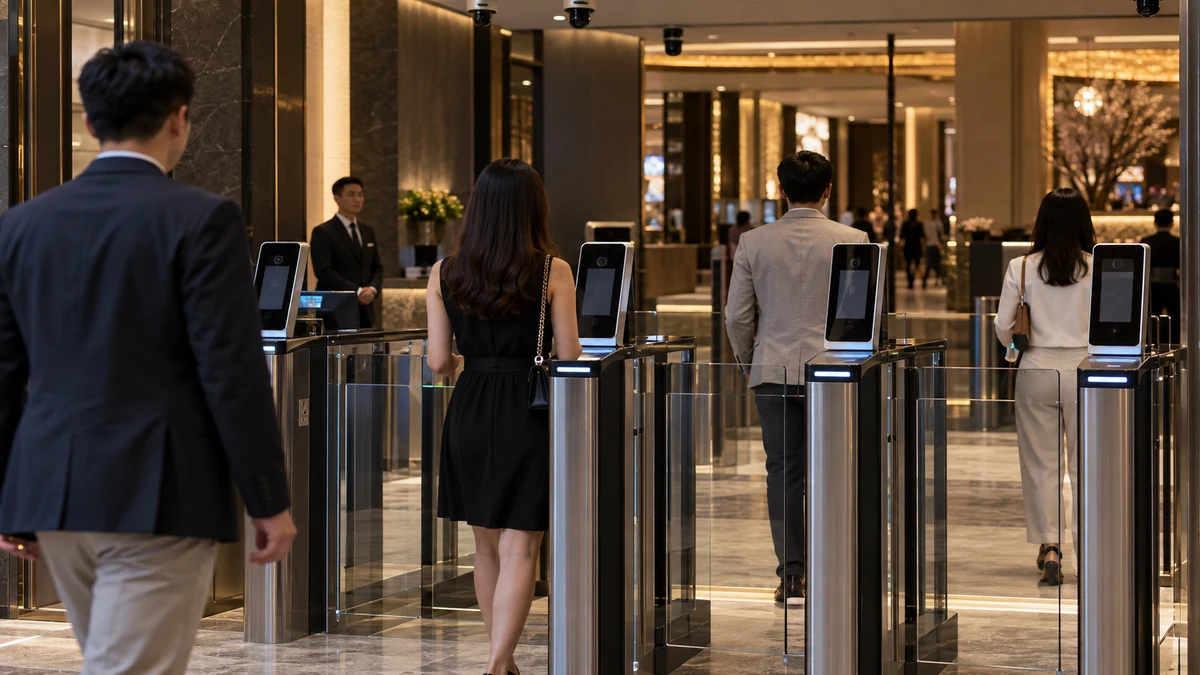 Biometric security turnstiles cross-referencing national exclusion registries at integrated resort checkpoints
Biometrics and Exclusion Registries
The front-line defense against problem gambling in Asian integrated resorts is the biometric entry gate. In Singapore's Marina Bay Sands and Resorts World Sentosa, as well as newly developed properties across Macau and the Philippines, all access portals connecting non-gaming hotel corridors to casino gaming floors are equipped with high-throughput facial recognition camera turnstiles.
| Technology System | Hardware / Software Layer | Operational Response Trigger | Regulatory Jurisdiction |
|---|---|---|---|
| Biometric Facial Scanners | High-speed 3D facial geometry cameras | Instant physical turnstile gate lock | Singapore (GRA), Macau (DICJ), Japan (JCRC) |
| Cashless IC Card Limits | Smart card RFID telemetry | Automated machine lockout upon cap breach | Japan (Smart Pachinko), South Korea (Kangwon Land) |
| Behavioral Anomaly AI | Predictive neural network tracking | Automated alert sent to responsible gaming host | Major Asian integrated resort properties |
| Time-On-Device Limits | Electronic gaming terminal session timers | Mandatory un-dismissible cooling-off screen | National player protection compliance standards |
As patrons approach the entry turnstiles, optical sensors capture three-dimensional facial geometry, cross-referencing biometric data against centralized government databases in under two hundred milliseconds. The system cross-checks multiple exclusion categories: voluntary self-exclusions, family-initiated exclusion orders, and court-mandated third-party bans. If an excluded individual is detected, the turnstile physically locks, silently notifying floor security and responsible gaming personnel to intercept the patron discretely.
 Smart card terminal reader enabling pre-commitment spend caps and automated time tracking
Smart Cards and Pre-Commitment
On electronic gaming machine floors, player protection technology is integrated into cashless payment interfaces. In South Korea's Kangwon Land, players must insert personalized smart cards (COOL-OFF cards) into electronic terminals before any wager can be placed. Similarly, Japan's newly deployed Smart Pachinko and Smart Pachislot terminals utilize contactless IC cards that monitor session credits.
These smart card interfaces empower patrons to utilize pre-commitment tools before initiating play. Players configure binding voluntary parameters: maximum loss caps per session, maximum total wagers per day, and mandatory session time ceilings. Once a configured threshold is reached, the terminal automatically freezes credit wagering, ejects the smart card, and prevents reactivation across the property floor until a mandatory 24-hour cooling-off interval has elapsed.
Predictive Algorithmic Behavioral Analysis
Beyond static limits, cutting-edge integrated resorts deploy artificial intelligence platforms that analyze real-time player telemetry to detect early behavioral indicators of distress. Proprietary algorithms continuously track operational parameters: sudden escalations in average bet size, dramatic increases in button-press velocity, consecutive ATM cash withdrawals within property boundaries, and extended continuous play exceeding eight hours.
 Confidential consultation suite where certified counselors provide player support and exclusion guidance
When an algorithm flags an elevated risk score, the software issues a confidential alert to dedicated on-site responsible gaming hosts. Trained in psychological de-escalation protocols, hosts approach the player on the gaming floor, offering complimentary refreshments, initiating gentle welfare checks, and providing private consultation regarding voluntary break options without public embarrassment.
Casino-side monitoring does not replace player-facing options such as visit limits, self-exclusion periods or payment blocks. For those tools and their terms, see Player Protection and Self-Control Tools; for safeguards built into game design, see Responsible Game Design.